Controllo delle alghe In a 2009 article in the old
in his forum, Tom Barr, emphasizes the fact that the different systems of fertilization are often proposed as methods to combat algae when in fact only be understood as methods for growing plants.
He stresses that arise from this basic misunderstanding of many of the problems encountered by aquarists and that the only way to solve this problem is to return to the basic application, or "What causes the growth of algae?".
Beyond the fact that the premise could be questioned, as a better growth of the plant is almost always an unfavorable environment for algae, some of the points raised are certainly interesting.
The first is that there is una risposta unica al quesito in quanto esistono moltissimi tipi e specie di alghe con esigenze specifiche per ciascuna specie.
Questo concetto è ovvio ma viene spesso dimenticato e nelle discussioni che avvengono su internet si tende a generalizzare o al limite ad individuare vagamente la tipologia di alga.
Nell'articolo si mette in luce come, in alla
legge di Liebig molti ritenendo la PO4 essere la causa principale delle alghe cerchino di limitarla in modo da togliere nutrimento alle stesse.
Viene fatto notare che l'eccesso di PO4 non può essere considerato una causa primaria in quanto si possono trovare molti esempi di acquari con (relativamente) forti concentrazioni di PO4 e la completa assenza di alghe e viceversa aquariums PO4 limited and strong algal ... PO4 then not only can not be considered the primary cause (if in excess) but not the limiting factor for algae. From here
Tom Barr explained that most influence with respect to the dosage of CO2 has PO4. In particular shows that, even in pools in which the CO2 is not limiting, it is possible to induce an algal bloom suddenly changing the dosage of the same.
The phenomenon is greater the more often you make changes ... and the end result is always the greater adaptability of the algae from the plants to sudden environmental changes.
This coincides with an observation made several times in my aquarium and confirmed A recent (yet another) occurs. About three months ago, I forgot to reload the small tank of CO2 (a yeast) and when I realized that the emission of carbon dioxide was zero, a bit 'out of laziness, partly' because the plants did not show signs of distress , a little 'because however Doso carbon in liquid form I decided not to refill them.
Within a couple of months, during which there was no added CO2 with yeast, algae, the situation was greatly improved. As a double for a couple of weeks I restarted the CO2 and algae are back (filamentous, staghorn, and BBA).
I do not think that CO2 causes algae but it is likely that, as the yeast system is absolutely non-adjustable variations due to it are more harmful than the benefit resulting from the addition of CO2.
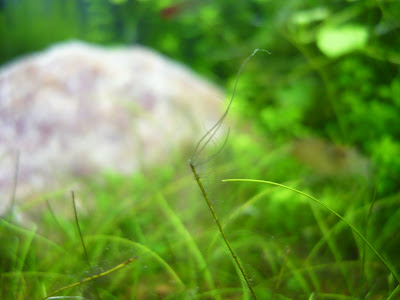 Staghorn on stem Eleocharis
 Tom Barr himself insists (trying to translate word for word): "As long as CO2 is stable and does not change / vary too much from week to week the plants should continue to and thrive, small but free from algae. "
analysis extremes then the problem is recommended, in low tech aquarium, CO2 without changing the water more frequently than a month since the weekly changes were due to peaks of CO2 that would promote algae.
Again, my observations coincide because, although it does not get to experience change monthly or even every two months, I noticed that the best results I obtained with two small weekly changes rather than more massive changes weekly or fortnightly. Probably my system, increasing the frequency and reducing the quantity, the peak level of variation.
Tom, with a subsequent post, extensive analysis with other nutrients, and notes that increasing the NH4 is possible to induce an "algae bloom". Your point however is that this phenomenon does not generate an increase in other types of algae and therefore should be considered only direct cause for this phenomenon.
With regard to the Redfield Ratio linking P and N in the article mentioning i lavori di Anderson che in merito spiega come il RR sia un parametro abusato in quanto esso è un valore medio calcolato su scale ampie di spazio, tempo, volumi e tipi di alghe e andrebbe ricondotto almeno a valori specifici per le specie osservate. ..
 The lack of branching and leaves me to prevent a relatively small membership of the genera and Vesicularia Fissidens but seems to confirm the membership of the kind Taxiphyllum. But I have noticed the similarity with the typical growth of Leptodictyum riparium (stringy Moss) ... the following photo taken from the site Aquamoss compare, order,
 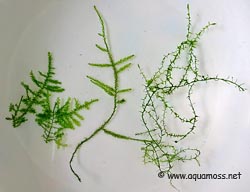 The photo does not fully resolve the doubt in that, only by comparing the structure of the moss in my possession which could be either Java stringy moss.
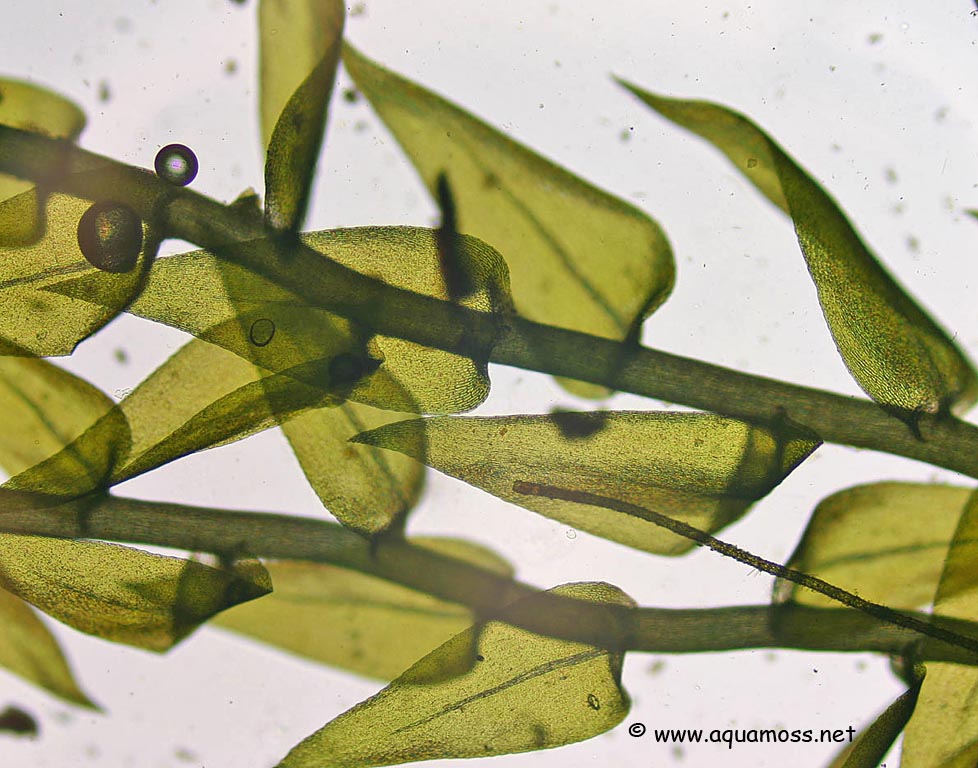
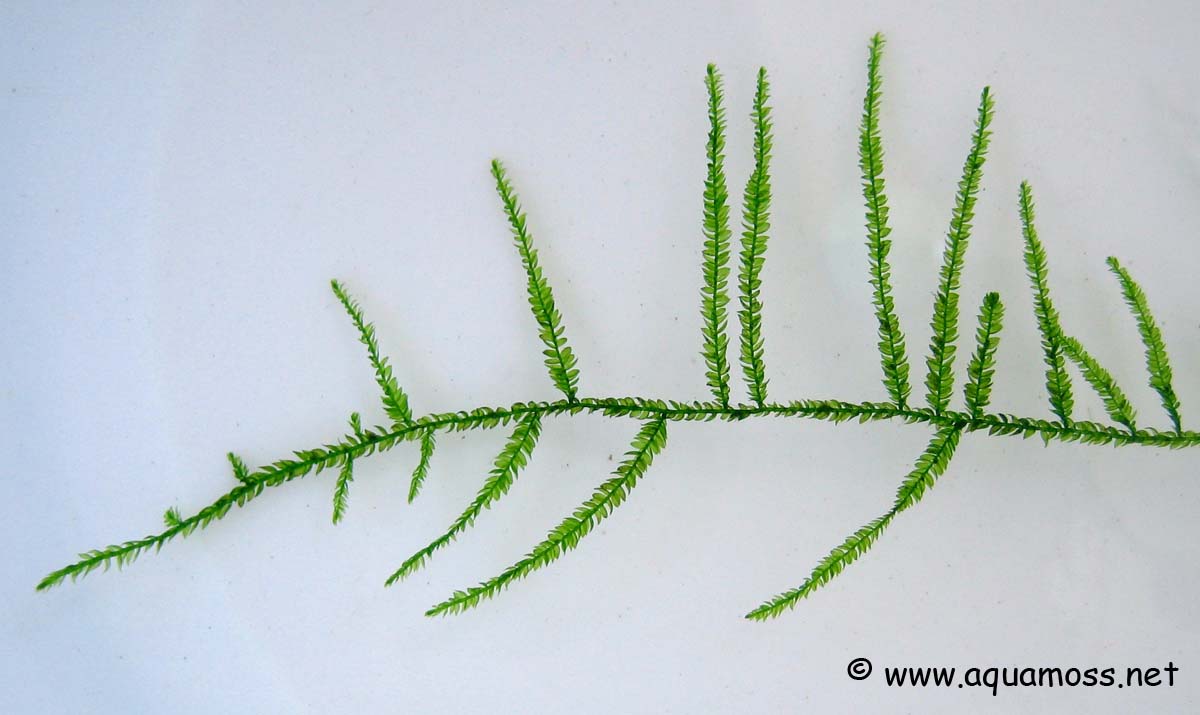 So both the structure and the type of growth would seem to confirm that what is in my possession Leptodictyum riparium. This does not significantly alter the method of cultivation as it is a moss that supports environmental characteristics similar to Taxiphyllum barbers, instead change the rules for use in the aquarium as much vertical development, which I actually found, makes it more suitable for a background compared to the cultivation on wood or a focal point in the foreground.


